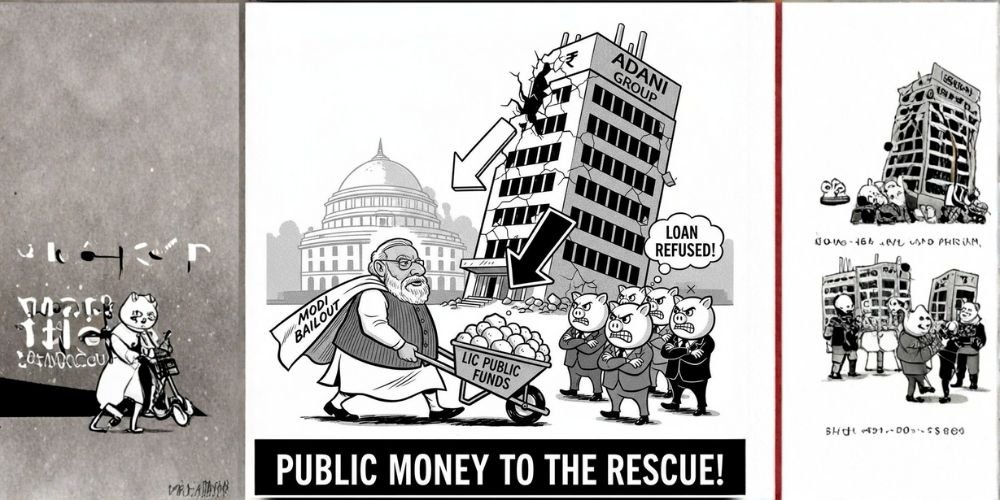
Did Modi’s Govt Use LIC Funds to Bail Out Adani When Banks Refused Loans?
Chronology समझिए -आपका पैसा LIC से सीधे Adani की जेब तक!
— Indian Youth Congress (@IYC) October 25, 2025
#MODANI का पूरा सच !! 🤯 pic.twitter.com/ENJe648T6I
दोस्त के लिए कुछ भी करेगा!
— Molitics (@moliticsindia) October 28, 2025
@cartoonistrrs
#LIC #Adani #PMModi pic.twitter.com/y9ilpCwP1H
In 2025, a major controversy erupted over claims that Prime Minister Narendra Modi’s government directed the Life Insurance Corporation of India (LIC) to invest nearly $3.9 billion (approximately ₹33,000 crore) in various Adani Group companies led by Gautam Shantilal Adani. This move came amidst reports that global banks, following a string of US bribery and fraud charges against Adani and his associates, were reconsidering or halting new loans to the Adani Group — effectively squeezing their access to traditional financing channels.
Internal government and LIC documents reportedly showed a coordinated plan from the Finance Ministry and its agencies to funnel immense funds from LIC, India’s biggest life insurer, into Adani bonds and equities. For example, in May, Adani Ports required roughly $585 million for bond refinancing, which LIC financed alone when no bank stepped forward. Such decisions sparked intense criticism, as opposition parties accused Modi of shielding his ally from market and legal troubles while ordinary policyholders’ savings were deployed to reassure investors and support Adani’s debt-ridden empire.
Despite the uproar, official statements from LIC and government agencies have denied any improper influence or violation of due diligence, maintaining that Adani-related investments are a minor part of LIC’s vast portfolio. They also argue that foreign investors freely invest in Indian infrastructure, and such targeted narratives are politically motivated.
It’s essential to note that while Adani faced credit constraints from banks due to international indictments, the immense capital injection from LIC was not a direct cash gift, but rather structured investment in debt and equity, aimed at fortifying market confidence and stabilizing troubled assets. The controversy centers not on a literal handover of money, but on the intersection of public funds, political influence, and the risks borne by Indian households during corporate rescues.